10 Easy Ways to Reduce Utility Bills
Utility costs are rising across the United States. In Upstate New York, for example, National Grid has proposed electric rate increases of approximately 31% and natural gas increases of 40% over the next several years. Similar increases are occurring in many regions as utilities invest in aging infrastructure, electricity demand grows, and energy markets continue to shift.
While homeowners cannot control utility rates, they can control how much energy they use. The following strategies are relatively simple steps that can meaningfully reduce utility bills without major lifestyle changes.
1. Sign Up for Community Solar
Community solar programs allow homeowners and renters to receive credits on their electric bills from a shared solar farm. In most cases, participants receive about a 10% discount on their electricity costs. Many homeowners assume there must be a catch, but the economics are fairly straightforward. Solar developers receive higher compensation when their electricity is applied directly to a customer’s bill rather than sold into the wholesale grid. For example, electricity sold into the grid might earn around $0.04-$0.08 per kWh, while credits applied to customer bills may be valued between $0.12–$0.17 per kWh. Because of this pricing structure, developers can offer customers a discount while still earning more for their electricity production.
2. Participate in Utility Demand Response Programs
If your electric utility is Con Edison, you may be eligible for programs such as Grid Rewards, which compensate customers for temporarily reducing electricity use during periods of peak demand. These programs are designed to stabilize the electric grid during high-demand periods such as heat waves. Participants who reduce energy consumption during these events can receive direct financial rewards, often with minimal inconvenience.
3. Check for Air Leaks Around Windows and Doors
Air leakage is one of the most common and overlooked causes of high heating bills. In some cases, the solution can be as simple as ensuring windows and doors are properly latched. Even high-end windows can perform poorly if they are not properly latched or if the surrounding framing lacks adequate air sealing. A professional energy audit can identify more complex air leakage issues, but many homeowners can address smaller issues themselves using weatherstripping or caulking.
4. Consider Geothermal When Replacing a Heating System
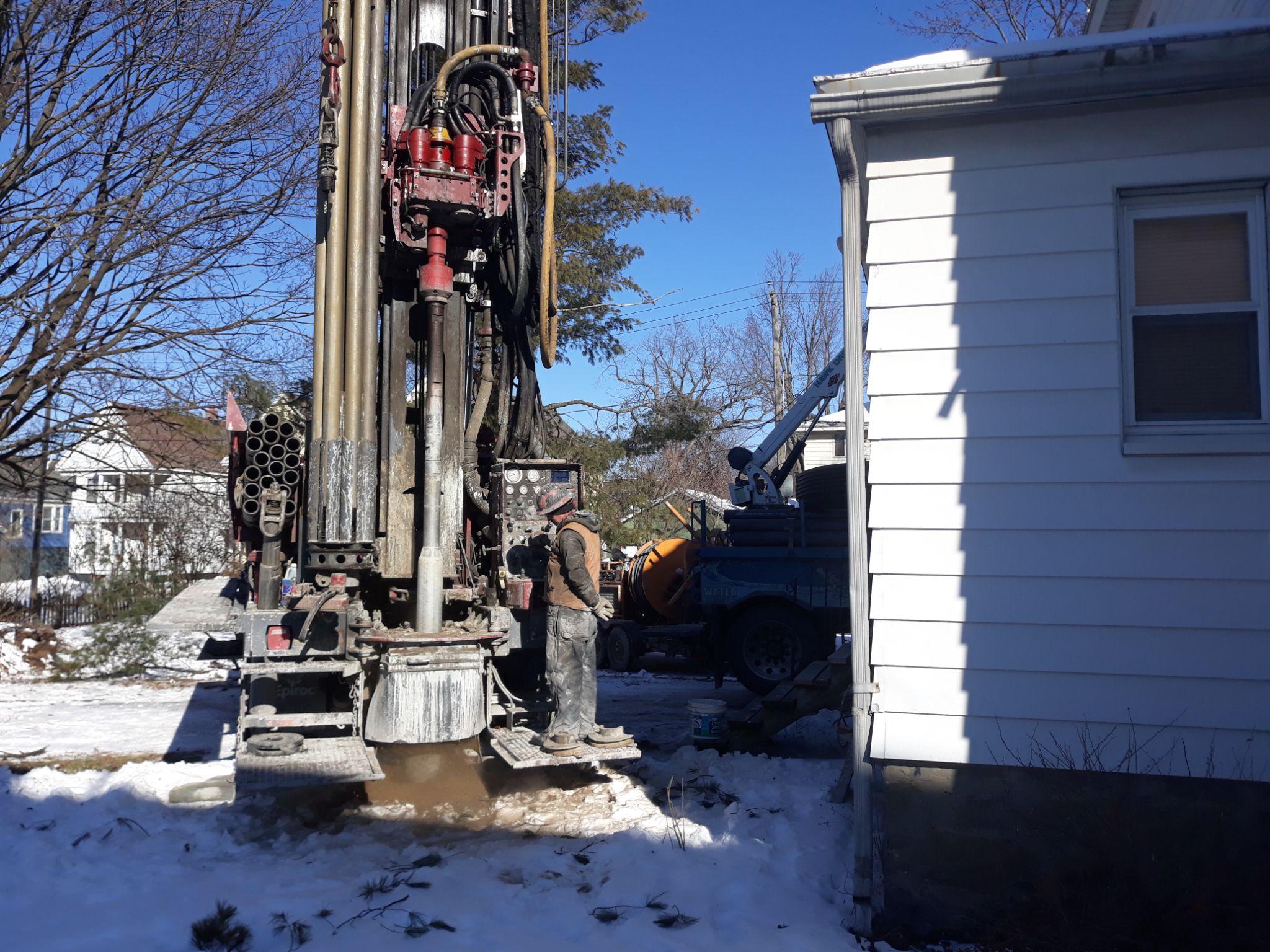
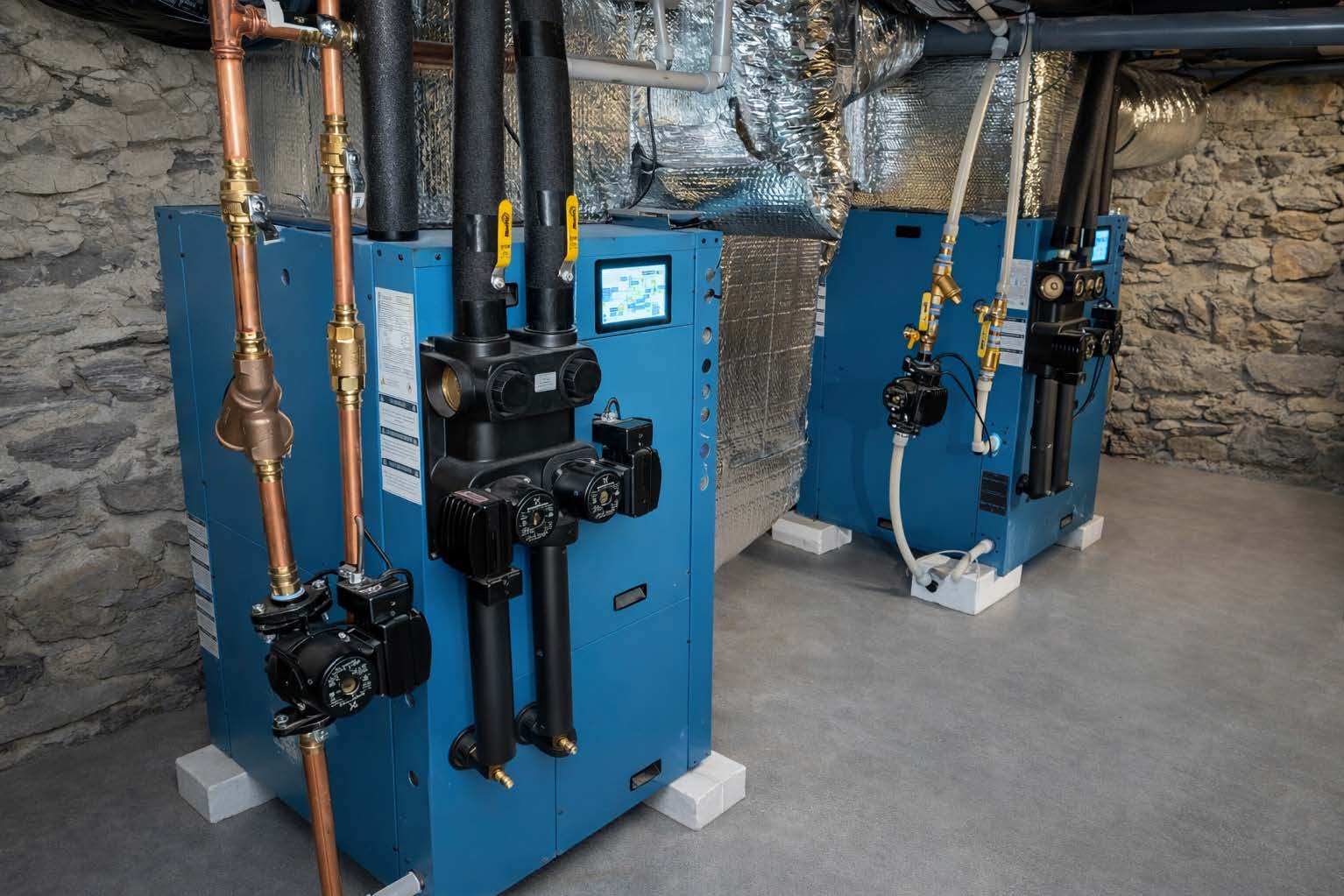
If your home is due for a heating system replacement, geothermal heat pumps are one of the most efficient options available. Geothermal systems use the stable underground temperature—typically around 50°F—as a reliable energy source. Because of this stable temperature, they operate with extremely high efficiency and can provide consistent heating even during subzero winter conditions. Modern geothermal systems are also highly adaptable. Companies such as Energy Catalyst manufacture systems that can integrate with existing distribution systems including baseboard radiators, hydronic radiators, radiant floors, and forced-air systems. Geothermal also pairs well with rooftop or community solar, allowing homeowners to significantly reduce both heating and electric costs.
5. Use Your Windows Strategically
Windows can have a significant impact on both heating and cooling energy use. During winter, be sure to close storm windows and remove window air conditioning units, which can create major air leakage paths. In the summer, reflective window shades or blinds can dramatically reduce solar heat gain and lower air conditioning loads. Simple adjustments to window use can reduce heating and cooling costs without any major investment.
6. Adjust Thermostats When Possible
Heating demand in a building is largely determined by the temperature difference between indoors and outdoors. The greater the difference, the more heat your heating system must supply. Reducing indoor temperatures slightly can therefore reduce heating demand significantly. Most homes have what energy professionals call a “balance point.” This is the outdoor temperature at which the home no longer requires heating because internal heat sources—such as appliances, lighting, and electronics—provide enough heat to maintain indoor temperatures. For many homes, this balance point is around 55°F. Consider a winter day when the outdoor temperature is 30°F. The heating demand is proportional to the difference between the balance point (55°F) and the outdoor temperature (30°F), or 25°F of heating load. If the thermostat is lowered by 5°F, the balance point drops to 50°F, reducing the heating load to 20°F. In effect, the heating demand has been reduced by approximately 20% during that period. While some of that savings is offset when the home returns to the original temperature, thermostat setbacks still provide meaningful savings. Reducing the thermostat by 5°F for eight hours during the day and eight hours overnight can typically reduce seasonal heating energy consumption by 8–12%. Heat pump based systems often receive the least benefit because their efficiencies are higher when operating at lower capacity.
7. Install CO₂-Controlled Ventilation
Many homes lose significant energy through uncontrolled ventilation. When outside air leaks into a home, the heating or cooling system must work harder to condition that air.
One solution used in high-performance buildings is CO₂-controlled ventilation, which automatically adjusts the amount of fresh air brought into the building based on indoor carbon dioxide levels. Because CO₂ levels tend to correlate with occupancy, these systems deliver ventilation only when it is actually needed. Most new construction requires ventilation, usually with an Energy Recovery Ventilator or Heat Recovery Ventilator. While these are efficient methods of bringing in fresh air, they still add additional load on the heating and cooling systems and are often sized for peak occupancy rather than the real occupancy.
8. Install a Heat Pump Water Heater
Water heating is typically the second-largest energy use in most homes, and it is also one of the easiest places to save energy. Traditional electric water heaters use resistance elements to generate heat, which is simple but inefficient. A heat pump water heater, by contrast, extracts heat from the surrounding air and transfers it into the water tank. Because it moves heat rather than generating it directly, the system can produce three to four units of heat for every unit of electricity consumed. In practical terms, this often reduces water-heating electricity use by 60–70% compared to conventional electric water heaters. Heat pump water heaters also provide a secondary benefit: they cool and dehumidify the surrounding space slightly while operating, which can be useful in basements during summer months.
9. Install a Smart Thermostat
Smart thermostats allow homeowners to automatically manage heating and cooling schedules based on occupancy patterns. Unlike traditional programmable thermostats, smart thermostats can adjust temperatures dynamically using occupancy sensors, weather forecasts, and learning algorithms. Many models also allow homeowners to monitor and control their system remotely, making it easier to manage energy use while traveling or away from home.
10. Upgrade Insulation in the Areas with the Fastest Payback
Insulation upgrades can dramatically reduce heating and cooling costs, but the return on investment depends heavily on where the insulation is installed.
From a cost-effectiveness perspective, the areas that typically provide the fastest payback are:
- Attics – Heat rises, making attic insulation one of the most effective upgrades for reducing winter heat loss. Blow in cellulose or fiberglass is relatively easy to install and box stores such as Lowes and Home Depot offer free equipment rental with purchase of the insulation.
- Rim joists and basement ceilings – These areas are often poorly insulated and can be major sources of heat loss. A thin layer of spray foam around rim joists is very easy and can also help to keep rodents out. I recommend the Akfix closed cell foam– for around $215 you can seal up all rim joists on a casual Saturday afternoon. Don’t forget to wear the safety glasses!
- Air sealing before insulating – Sealing gaps and penetrations before adding insulation ensures the insulation performs as intended.